



Workplaces are evolving faster than ever, driven by shifts in technology, values, and expectations. These changes don’t just affect how work gets done they fundamentally reshape team culture. Staying ahead of emerging workplace trends isn’t just a nice-to-have; it’s essential. Businesses that adapt can foster stronger collaboration, boost employee engagement, and build resilient teams that thrive in uncertainty.
Recent research underlines how profound these shifts are becoming:
- According to McKinsey’s State of Organizations, 87% of executives say they’re experiencing skill gaps in the workforce or expect them within a few years, highlighting the urgent need for continuous learning and adaptability.
- A recent Gallup study found that flexible work arrangements now rank as one of the top three factors employees consider when evaluating job opportunities, with 54% of hybrid workers saying they would look for another job if flexible work options were taken away.
- The World Economic Forum’s Future of Jobs Report predicts that by 2027, 44% of workers’ core skills will have changed, driven largely by technological adoption, automation, and evolving business models.
- Meanwhile, Deloitte’s Global Human Capital Trends reports that 77% of organizations believe leadership needs to evolve toward empathy, authenticity, and human-centered management to meet the expectations of today’s workforce.
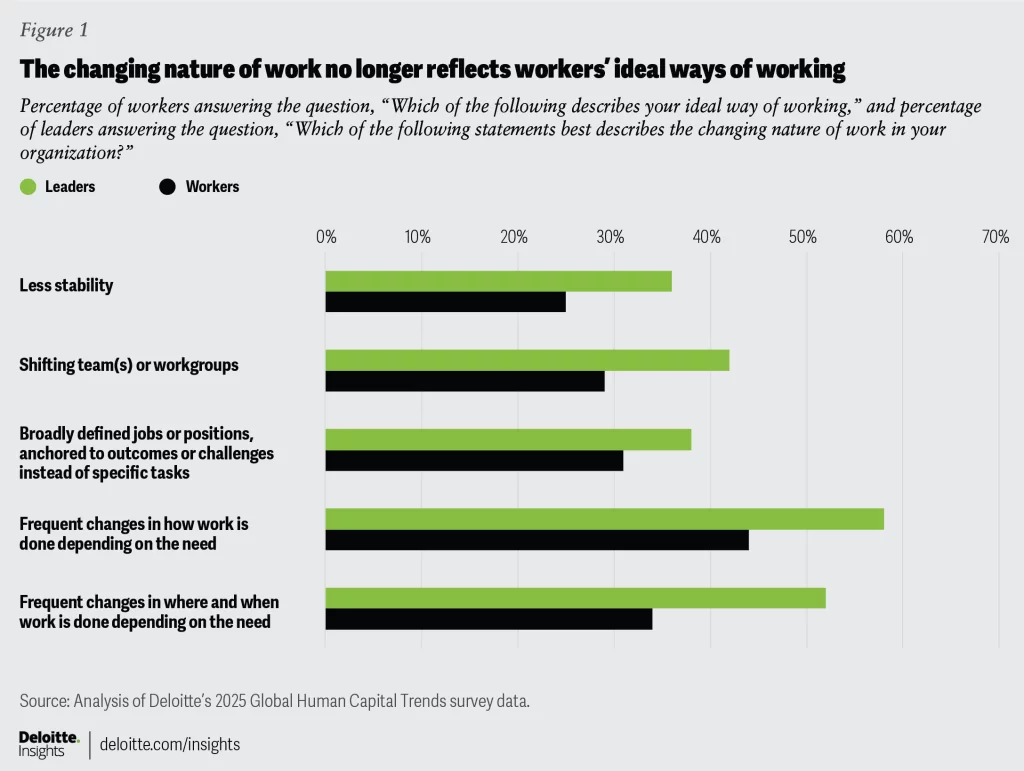

Source: Deloitte
These data points reflect not just shifting preferences but a deeper transformation in how employees define meaningful work, balance personal well-being, and expect companies to support their professional and personal growth.
This article dives into the top trends shaping team culture today. From flexible work models to purpose-driven leadership, we explore how these movements are changing the way teams collaborate, communicate, and connect. Understanding and embracing these shifts is key to creating work environments where people don’t just clock in, but truly thrive.
Top workplace trends to look out for
1. Hybrid and Flexible Work Models
The hybrid work model isn’t just a buzzword it’s the new normal. Post-pandemic, most teams split their time between office and remote work, blending the best of both worlds.
According to Buffer’s State of Remote Work, 98% of workers want to work remotely at least some of the time for the rest of their careers. Flexibility has become a non-negotiable expectation for many employees.
Benefits of Hybrid Work
- Employees gain more control over schedules and environments
- Boosts satisfaction and work-life balance
- Allows tailoring the day to peak productivity
- No longer tied to strict office hours
Challenges of Hybrid Work
- Team cohesion can weaken with mixed presence
- Communication gaps and isolation risks
- Requires intentional effort to maintain trust and collaboration
Strategies for Success
- Double down on clear, consistent communication
- Hold regular check-ins
- Use collaboration tools wisely
- Create rituals to foster inclusion for both remote and in-office teams
- Set expectations around availability and responsiveness
Ultimately, hybrid work demands a shift from where you work to how you work. By focusing on output, supporting flexibility, and maintaining open lines of communication, teams can transform hybrid work into a long-term advantage.
2. Emphasis on Employee Well-being and Mental Health
Mental health is no longer a side conversation it’s central to organizational performance. The American Psychological Association reports that 92% of employees say it’s important for employers to support their mental health, yet many feel their organizations fall short.
Wellness programs are expanding:
- Counseling access
- Mental health days
- Mindfulness sessions
- Fitness and wellness perks
Leaders who demonstrate empathy are driving stronger engagement. A Harvard Business Review study found that employees who feel their organization cares about their well-being are 3x more likely to be engaged and productive.
Prioritizing well-being isn’t just a feel-good initiative it’s smart business that boosts morale, innovation, and retention. Humanizing work has to be an important consideration in today’s modern workplaces too.
3. Diversity, Equity, and Inclusion (DEI) Becoming Core Values
DEI is no longer optional or PR-driven it’s a core business strategy. According to McKinsey’s Diversity Wins report, companies in the top quartile for diversity are 36% more likely to outperform their peers financially.
Key DEI drivers:
- Inclusive hiring from diverse candidate pools
- Ongoing training on unconscious bias and cultural competence
- Open dialogue around equity and privilege
- Leadership commitment to accountability
When teams reflect diverse experiences, they spark more creativity, empathy, and better problem-solving directly fueling innovation and resilience.
4. Technology-Driven Collaboration and Communication
Digital collaboration is the new backbone of work. Platforms like Slack, Microsoft Teams, Zoom, and virtual whiteboards have become everyday essentials.
Within these environments, employee recognition software can help teams celebrate achievements and keep engagement strong even in remote settings.
A Gartner report predicts that by 2027, 75% of conversations within organizations will be recorded, analyzed, and processed with AI-powered collaboration tools.
AI and automation are increasingly handling administrative tasks, freeing teams to focus on higher-value work such as problem-solving, creativity, and decision-making.
Mastering digital tools isn’t optional it’s now a basic competency for effective team collaboration.
5. Focus on Continuous Learning and Development
In fast-changing markets, continuous learning has become a survival skill. LinkedIn’s Workplace Learning Report shows that 89% of L&D professionals say proactively building employee skills will help navigate the future of work.
Modern learning methods:
- Microlearning through platforms like LinkedIn Learning, Coursera, and Udemy
- Bite-sized, in-the-flow learning rather than long workshops
- Development of “growth mindsets” that encourage curiosity and experimentation
Leaders who foster a culture of learning empower teams to stay agile, embrace change, and innovate continuously.
6. Results-Oriented Work Environment (ROWE)
The traditional 9-to-5 grind is being replaced by output-based work cultures. A PwC Workforce Hopes and Fears Survey finds that 74% of employees want to be measured by the outcomes they produce, not hours worked.
Benefits of ROWE:
- Greater autonomy
- Customizable schedules
- Increased personal accountability
- Focus on real business impact
The challenge lies in setting clear, objective metrics and building trust between managers and teams. When done well, ROWE leads to highly motivated, performance-driven teams.
7. Purpose-Driven Work and Corporate Social Responsibility (CSR)
Employees increasingly expect their employers to have a meaningful mission. A Edelman Trust Barometer shows that 69% of employees want their job to contribute positively to society.
Ways companies embed purpose:
- Sustainability and environmental initiatives
- Volunteering opportunities
- Social impact projects
- Community partnerships
Purpose-driven companies enjoy stronger engagement, loyalty, and collaboration as employees feel connected to a greater mission beyond profits.
8. Redefinition of Leadership and Management Styles
Command-and-control leadership is giving way to human-centered leadership. Gartner’s HR Leaders Agenda reports that 82% of employees say it’s important for leaders to show empathy.
Key leadership shifts:
- Transparency
- Vulnerability and psychological safety
- Coaching vs. directing
- Emotional intelligence
- Empowering teams to make decisions
Training programs focused on active listening, inclusion, and empathy are helping managers evolve into true people-first leaders.
9. Physical Workspace Evolution
The office is being reimagined for flexibility, collaboration, and well-being. A JLL Global Workforce Preferences Survey shows that 60% of employees prefer hybrid models that blend in-office collaboration with remote flexibility.
Office design trends include:
- Flexible meeting spaces for hybrid teams
- Quiet zones and focus pods
- Wellness rooms and improved air quality
- Ergonomic furniture and natural light
- Collaborative common areas to foster spontaneous interaction
The physical workspace is now a strategic tool for engagement, innovation, and company culture, not just real estate.
Final thoughts on workplace trends
The workplace is not waiting for anyone; it’s shifting fast, and team culture is changing right along with it. From hybrid work to mental health, DEI, gamifying work and continuous learning, these trends aren’t just buzzwords. They’re the foundation for how teams will function and thrive in the years ahead.
Companies that embrace these changes, backed by data, empathy, and technology, will build stronger teams, retain top talent, and outperform competitors. The organizations that move fastest will not only adapt, they’ll set the new standard.