



There was a time when the daily stand-up felt like magic. A quick, sharp huddle that got everyone energized, flagged blockers early, and made sure we were all aligned, without turning the morning into a marathon. It was like the caffeine of meetings: short, sweet, and effective.
But then, reality hit. Enter the world of hybrid, distributed, and fast-paced work environments. Suddenly, the stand-up started to feel less like a productivity booster and more like an obligation. Instead of driving momentum, it began to drain energy. According to a survey by Robert Walters, more than half of professional workers said that virtual meetings were regularly interrupted their working day, with a quarter having five or more online meetings daily. The average meeting duration of 30 minutes accumulates to a significant portion of the workday being consumed by these calls. Blockers were surfacing way too late, and let’s be honest — some days, it just felt like another calendar block to survive.
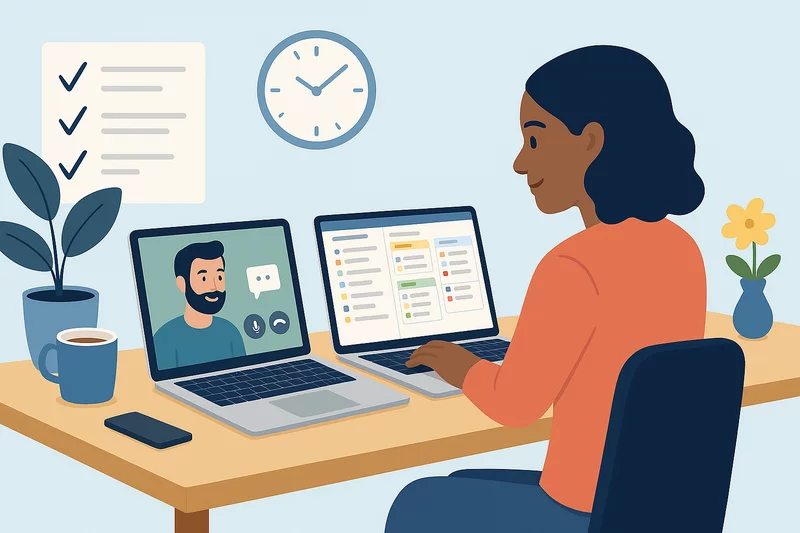

I came to a realization: we needed something smarter. A faster, more contextual way to check in — one that didn’t feel like micromanaging or a waste of time. Something that actually strengthened execution instead of just adding to the to-do list.
And that’s when I knew: the daily stand-up was officially on life support. Time to bring in a new, more efficient way to keep projects on track without turning it into a meeting marathon. Here’s what I figured out.
Why Traditional Daily Check-Ins Break Down
At first, I thought it was just us. Maybe we were just doing stand-ups wrong. After all, we’d heard all the success stories: quick syncs, smooth flows, and teams marching forward like clockwork. I figured maybe we just hadn’t cracked the code yet. But as I worked with more teams across industries, time zones, and cultures, it became clear: it wasn’t us. The system itself was broken. And once I realized that, it was like a light bulb went off.
Here’s where I saw things go off track:
1. Meetings Running Long and Eating Into Productive Hours
You know the drill — what should be a 15-minute stand-up somehow turns into 30 minutes, then 45, then… uh-oh, it’s lunch time. Suddenly, the whole morning’s been swallowed up in endless status updates, and we’ve got precious little time left for actual work. The whole point of a stand-up is to be quick, right? But it’s easy for everyone to start chiming in with unnecessary details, taking the meeting way off track. Instead of an energizing check-in, it starts feeling like a drawn-out saga.
2. Blockers Surfacing Too Late, Throwing Off Deadlines
Ever been blindsided by a blocker that could’ve been identified days ago? Yeah, me too. The problem is, by the time blockers are raised in a daily stand-up, it’s often too late to fix them without delaying the project. And let’s be real — in the fast-paced world of modern project management, “too late” can mean a missed deadline or, worse, a missed opportunity.
3. Time Zone Mismatches, Making Real-Time Meetings Impractical
I don’t know about you, but coordinating a stand-up for a distributed team across three continents? A logistical nightmare. Someone’s always up way too early, someone’s staying up way too late, and someone (usually me) is trying to pretend they’re fully awake at 7 AM. The reality is, real-time meetings aren’t always practical when you’ve got teams spread across different time zones. What used to be a quick, in-person sync becomes a scheduling nightmare that ends up disrupting everyone’s productivity.
4. Updates Scattering Across Slack, Emails, and Spreadsheets
Ah, Slack, the glorious place where project updates go to get lost. Updates that should be shared in a single meeting now scatter across multiple channels: Slack threads, email chains, random spreadsheets, and a hundred other places where information disappears faster than you can say “project update.” Trying to piece everything together feels like looking for a needle in a haystack. Meanwhile, the actual status of the project is lost somewhere between a ping from marketing and a random Google Doc link.
5. Ownership Getting Blurred, Leading to Confusion and Overlap
The more people involved, the more blurry the lines of ownership become. In the old days, you could just look around the room and know who was doing what. But now, with virtual teams and multiple stakeholders, responsibilities often overlap or get missed altogether. No one’s sure who’s accountable for what, and tasks start to fall through the cracks — not a great situation when you’re managing a high-stakes project.
6. Accountability: Feeling Forced, Breeding Resentment Instead of Responsibility
Let’s face it — when you’re constantly checking in with your team on every little thing, it can feel a lot less like accountability and a lot more like micromanagement. Nobody likes to feel like they’re under a microscope, especially when the check-ins are happening in a rushed and disconnected way. Instead of fostering a sense of ownership and responsibility, it can breed resentment. And trust me, resentment doesn’t do wonders for team morale.
In complex, cross-functional, and hybrid teams, all of these issues get magnified. The traditional stand-up simply isn’t designed for how we work today. The challenges of coordinating schedules, tracking blockers, and ensuring clear ownership aren’t just “annoying,” they’re downright disruptive. It’s like trying to fit a square peg into a round hole — it doesn’t matter how hard you push, it’s never going to work. And that’s when I realized: it’s time for a change.
And that’s when I realized: it’s time for a change. The old ways of doing check-ins just aren’t cutting it anymore.
How Nimble’s Execution Board Solved the Problem for Me (And Can Solve Yours Too)
As an Agile and marketing enthusiast, I’ve learned that the most effective check-ins don’t come from long, drawn-out meetings or endless status updates. They come from tools that align with your team’s natural workflow. That’s exactly what Nimble’s Execution Board did for me — and it can do the same for you.
The Execution Board tackles core daily check-in challenges by offering features that streamline updates and enhance team focus. For instance, the Select Card View (All Cards/My Cards) and View Selector help team members filter out noise, allowing them to see only what matters to their responsibilities or role. This reduces information overload and ensures discussions remain relevant. The Change Zoom Level feature lets users zoom in for detail or out for a broad view, preventing meetings from derailing due to unnecessary deep dives.


When new tasks emerge mid-discussion, features like Add Cards and Add Card from Backlog enable real-time updates without switching tools or breaking flow. Filter Cards by attributes like priority or status further sharpens team focus during time-boxed stand-ups, while the Expand option offers richer context for tasks when needed.
To drive structure and efficiency, the Stand-Up Wizard automates the daily check-in format, guiding teams through meaningful updates and minimizing tangents. Real-time accuracy is ensured by Refresh Board, while Board Editor and Card Designer offer customization that fits any team’s workflow. Visually, Card Color Scheme and Display Card Aging provide quick insights into priorities and potential risks, prompting faster decision-making.
For better context sharing, Display Media on Card embeds key images or files directly into tasks, reducing dependency on scattered communications. Meanwhile, Freeze Board Headers keeps vital column information visible at all times, even when scrolling, ensuring users never lose track of key data.


In short, Nimble’s Execution Board turns daily check-ins from a chore into a strategic, productive ritual. It’s designed not just for visibility, but for action—and that’s what moves real projects forward.
The Impact on My Work and Yours
With these features, Nimble’s Execution Board has helped me:
- Stay in sync effortlessly with my team, no matter where they are.
- Identify and resolve blockers early, avoiding delays.
- Focus on execution, not just reporting, to ensure faster project completion.
Nimble’s Execution Board isn’t just about tracking tasks — it empowers teams to work smarter, more efficiently, and with greater focus. It’s the tool every Agile leader needs to make real progress and deliver on goals with confidence
Embrace Smarter Check-Ins for Agile Success
Daily check-ins should never be a burden or just another scheduled task. When done right, they have the power to propel your project forward with clarity, focus, and efficiency. By embracing smarter, more efficient check-ins, you’ll gain real-time visibility into the status of your work, ensuring that everyone stays aligned and aware of progress. This visibility also allows you to pinpoint blockers immediately, preventing delays and ensuring that issues are addressed before they impact timelines.
Smarter check-ins also foster seamless coordination across hybrid or distributed teams, bridging time zones and enabling communication to flow effortlessly. The 5-minute rhythm for check-ins ensures that your team can stay on track without wasting time on lengthy status updates. This approach is designed to keep projects moving forward with purpose, making daily updates both concise and effective.
It’s time to move beyond status updates that drain time and energy. The future of project management is about standing ready, equipped with the context and confidence needed to drive results.
If you’re ready to elevate your daily check-ins and truly boost project momentum, Learn more about how to work with Nimble’s Execution Board here. Want to get hands-on and try the tool for yourself? Sign up for a Free trial of Nimble today!