


2025 was the year teams stopped debating whether to use AI and started asking a more practical question: how do we actually work better with it? As projects grew more complex, timelines tightened, and expectations continued to rise, simply adding more tools or working longer hours didn’t quite solve the problem.
What teams needed instead was clarity— better planning, faster decisions, and intelligence built directly into the way work happens.
For project managers and delivery leaders, this shift was especially visible. Planning could no longer start from blank pages. Status updates couldn’t depend on manual effort. Leaders needed insight without adding more overhead to already stretched teams.
“Working smarter” in 2025 wasn’t about automation for its own sake; it was about reducing friction, focusing attention, and making progress easier to sustain. At Nimblework, these realities shaped how work management evolved throughout the year. Instead of treating AI as a standalone feature or an experimental add-on, the focus was clear— embedding intelligence into everyday workflows.
How AI-powered work management redefined planning and collaboration in 2025
In 2025, through this approach, Nimble AI evolved steadily into an AI-powered work management platform that supports how modern teams actually operate across Agile, Hybrid, and Enterprise environments. AI agents began supporting core project tasks, and planning moved from manual setup to structured intelligence. Analytics became easier to interpret and act on, and collaboration grew more human and visible.
This wasn’t a year of isolated feature launches. It was a year of intentional progress, where each enhancement built toward a larger goal: helping teams deliver with confidence, giving leaders clearer insight without added overhead, and enabling organizations to scale work intelligently.
Looking back, one thing is clear: working smarter is no longer an aspiration. In 2025, it became a built-in experience. And in many ways, the foundations for how work will be planned, executed, and understood in 2026 and beyond.
What are Nimble’s AI-powered work management capabilities?
- Nimble Buddy – An in-context AI assistant that helps users generate, summarize, and refine work directly within cards, tasks, and discussions.
- Task-level AI agents – AI agents that assist with:
- Card and task descriptions
- Acceptance criteria
- BDD scenarios
- Task breakdowns
- Test cases
- Comment and discussion summaries
- AI-assisted planning from documents – Automatically extracts and structures work items from RFPs, SOWs, contracts, and project documents.
- AI-powered hierarchical planning – Generates multi-level plans aligned to card types, moving from goals to epics, stories, tasks, and dependencies.
- Advanced agile planning & scheduling – Uses AI to create structured, adaptable plans that support Agile, Hybrid, and Enterprise environments.
- Smart rescheduling – Automatically updates timelines based on real task progress and flags potential delays early.
- Executive summary AI agent – Converts dashboards and analytics into clear, narrative-driven summaries for leaders and decision-makers.
- AI-powered sentiment analysis – Analyzes comments and kudos to surface trends in team morale and engagement.
- Mindful AI – Provides transparency into AI resource usage, helping teams understand and manage AI consumption responsibly.
- Exploratory Hub (AI-guided Insights) – Offers contextual explanations, best practices, and guidance for metrics, reports, and analytics within the platform.
- AI-supported work structuring – Helps teams move from unstructured inputs to actionable project plans faster and with less manual effort.
AI that works where work happens
One of the biggest shifts in Nimble throughout 2025 was where AI showed up.
Instead of pulling users out of their workflows or forcing them to learn new interfaces, Nimble embedded AI directly into the places where work already happens — cards, tasks, discussions, plans, and dashboards.
With the introduction of Nimble Buddy and task-level AI Agents, AI became a practical collaborator in everyday projects. Teams could instantly generate card descriptions, acceptance criteria, BDD scenarios, task breakdowns, test cases, and comment summaries, all based on the context of the work itself.
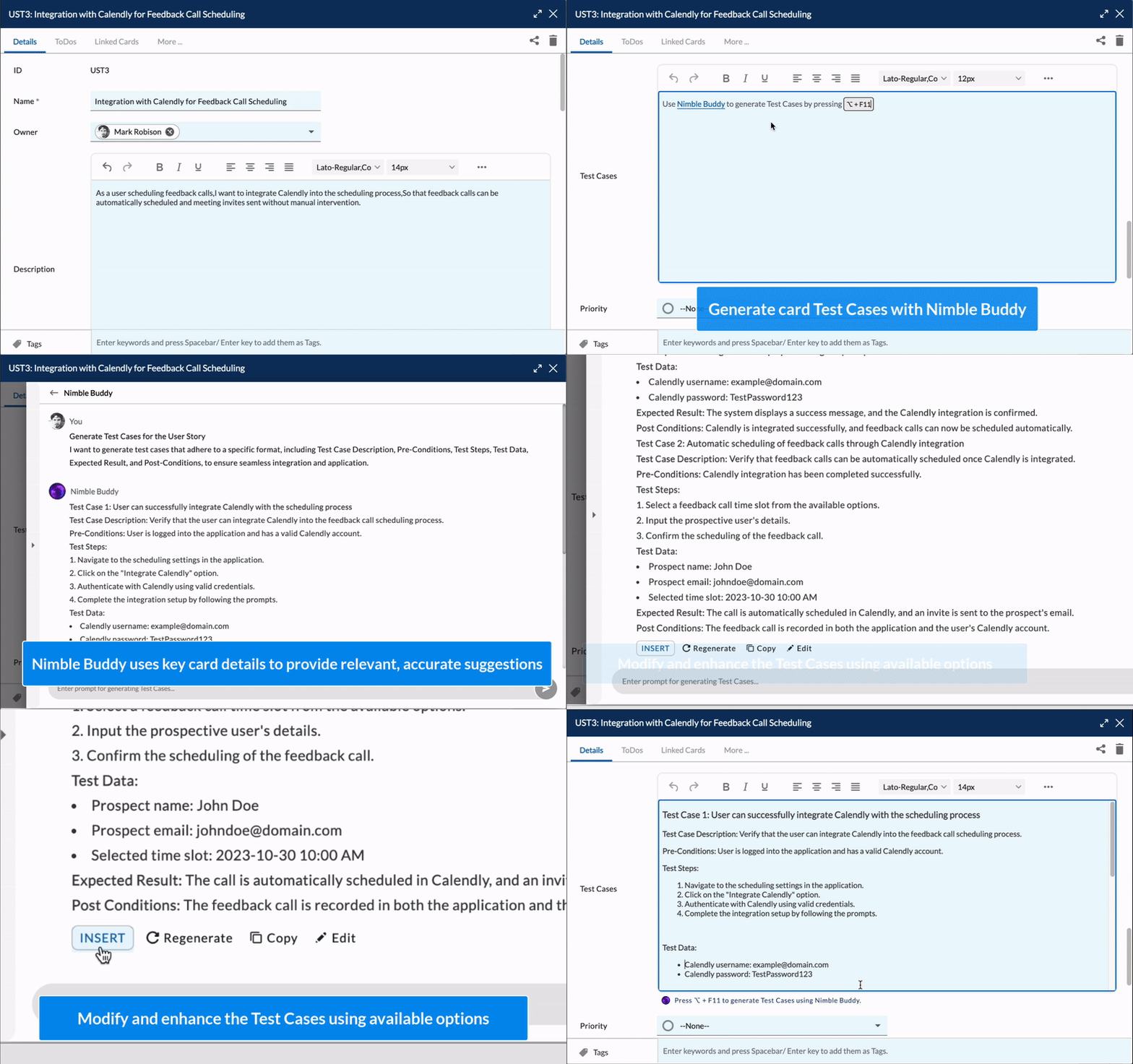

This removed the friction of starting from scratch and helped teams maintain quality and consistency without compromising delivery speed.
Importantly, these agents were designed to assist—not replace—human judgment. Whether drafting acceptance criteria or summarizing complex discussions, AI provided a strong starting point that teams could refine and validate. The outcome was simple but powerful: less time spent on repetitive setup and more time focused on problem-solving and execution.
As collaboration increased, Nimble extended AI beyond tasks and timelines into team experience. AI-powered Sentiment Analysis analyzed comments and kudos and gave insights that helped leaders to understand whether engagement was positive, neutral, or negative. Thus, helping them address issues early and foster a healthier, more human workplace.
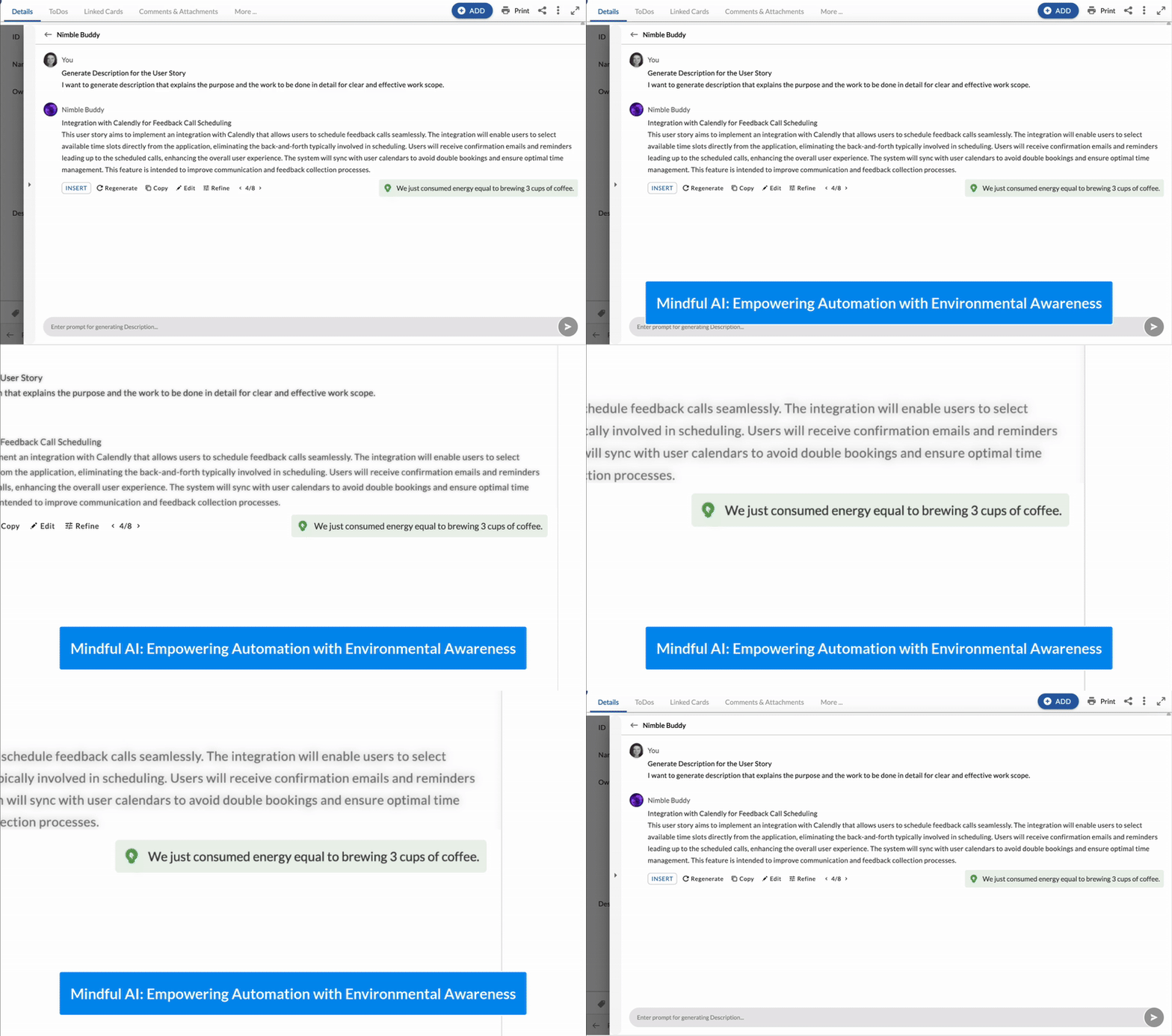
2025 also marked a deliberate move toward responsible and transparent AI usage. With Mindful AI, users gained visibility into the resource consumption of each AI interaction. This reinforced an important principle: AI should be powerful, but also conscious, encouraging teams to use automation where it truly adds value.

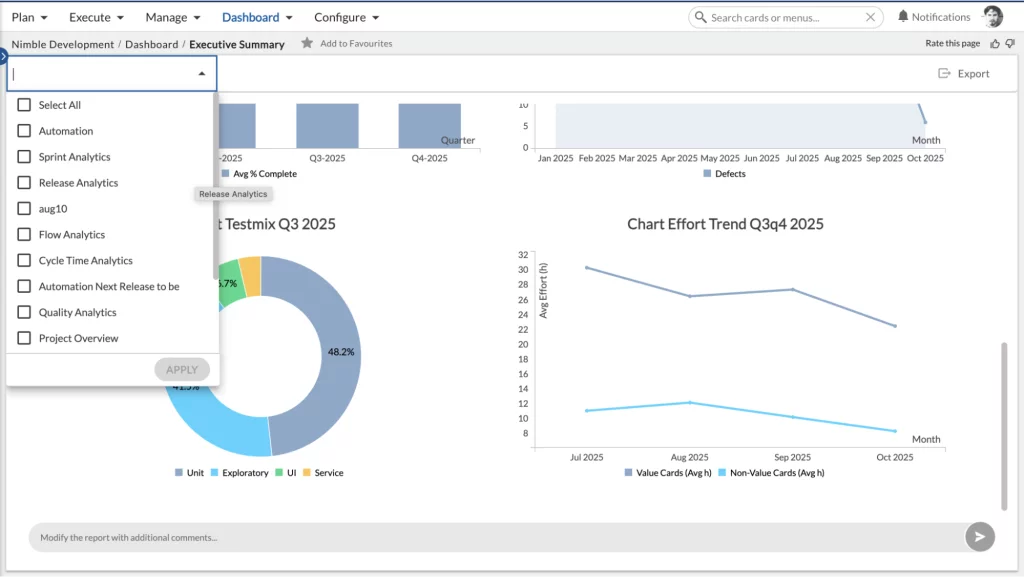
For leaders and decision-makers, AI took on a more strategic role as the year progressed. The Executive Summary AI Agent transformed dashboards from collections of charts into clear, narrative-driven insights. Instead of scanning multiple widgets, leaders could quickly understand trends, changes, and risks through automatically generated analytics.
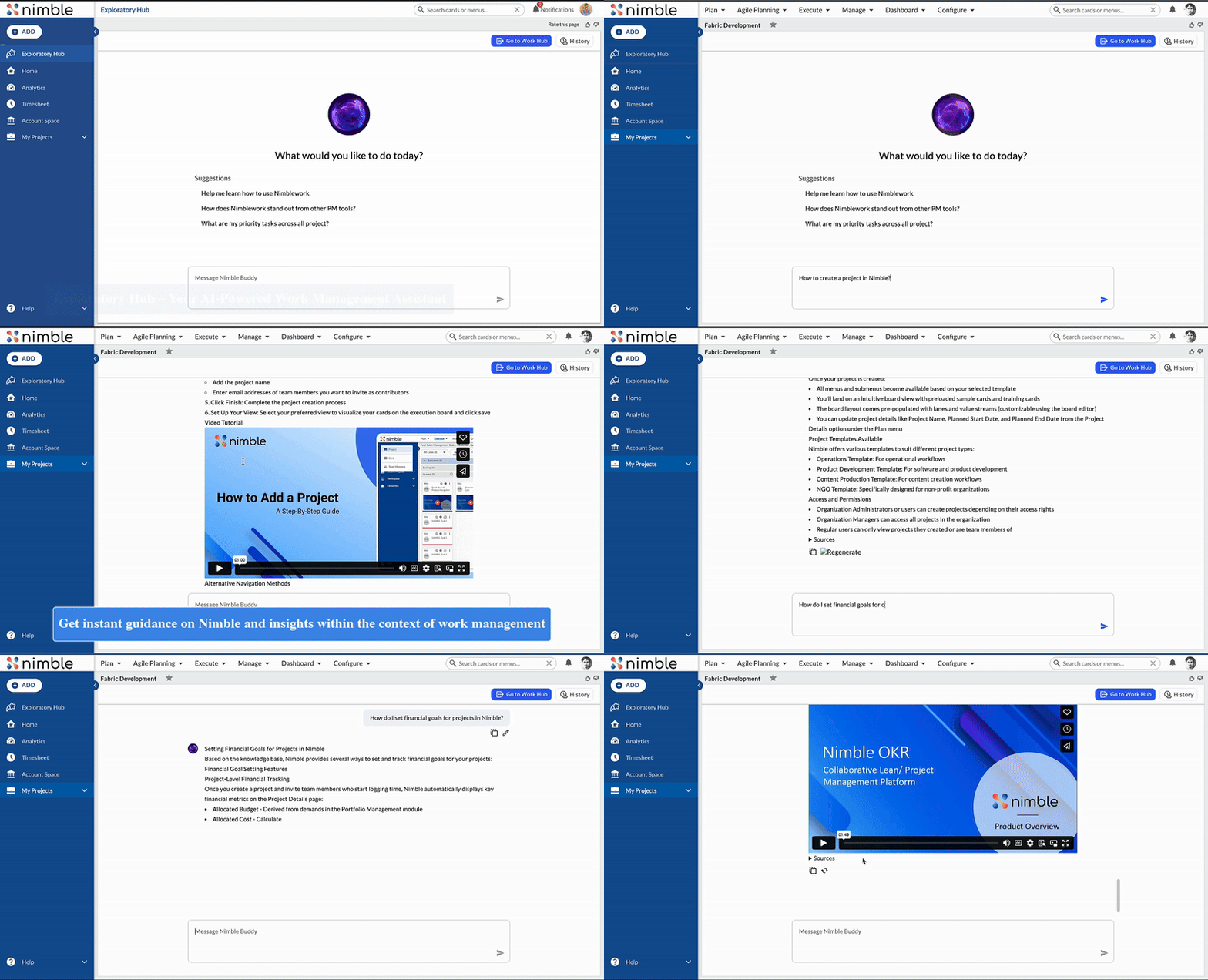
Complementing this, the Exploratory Hub provided contextual guidance, best practices, and explanations directly within Nimble, helping users interpret metrics and reports without leaving the platform. And with AI-powered hierarchical planning, teams could move from unstructured documents to well-defined project structures in minutes.

From blank pages to structured plans: Intelligent planning in action
For many teams, planning is where momentum is lost before work even begins. Blank pages, scattered documents, and constant rework often turn project kickoff into a slow, manual exercise.
In 2025, Nimble fundamentally reimagined this phase by turning planning into an intelligent, adaptive process.
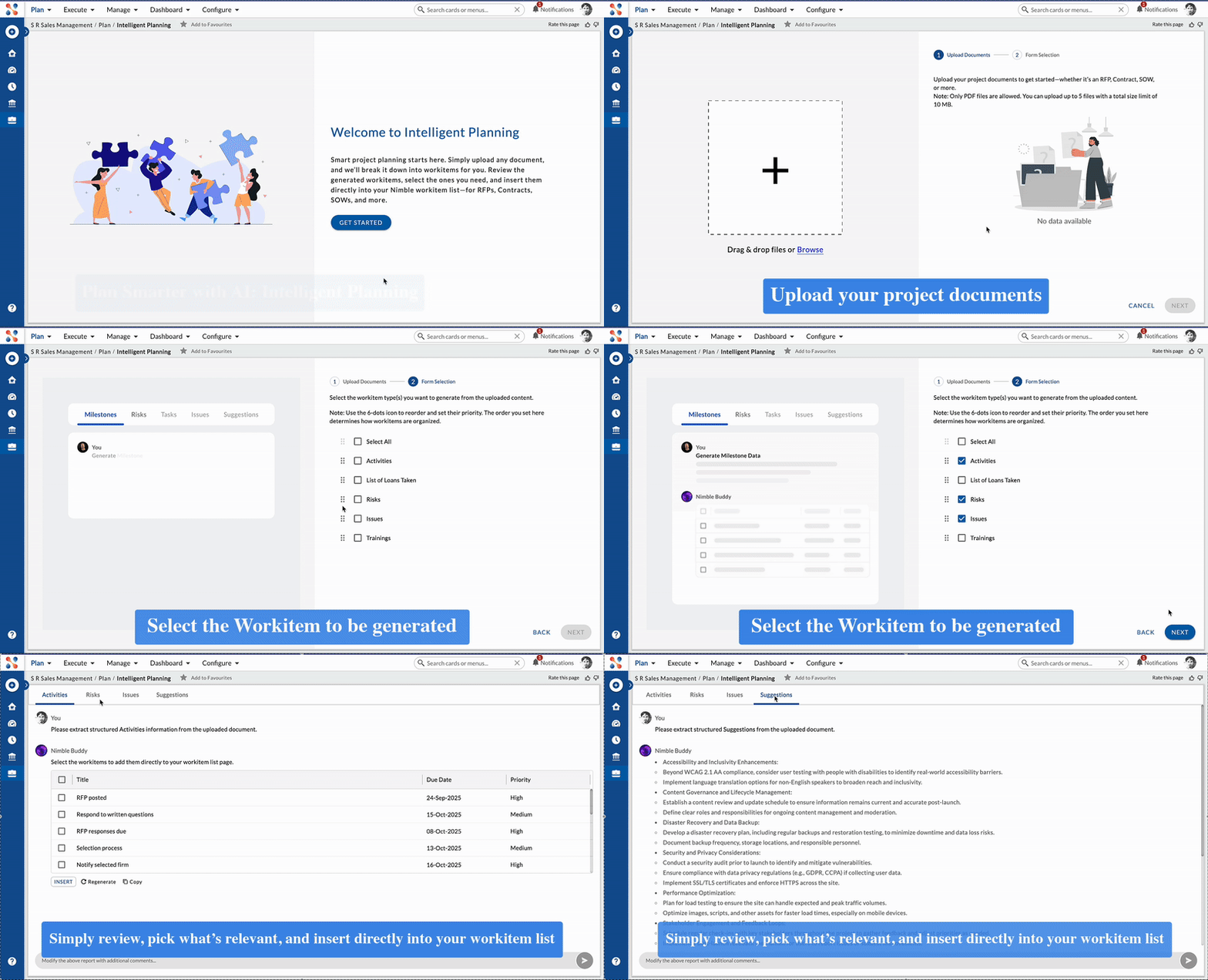
With Intelligent Planning, teams no longer had to manually break down RFPs, SOWs, contracts, or project documents. Teams could simply upload these inputs and let AI extract, suggest, and structure relevant work items. This dramatically reduced kickoff time and helped teams move from intent to execution with much less effort.
As these capabilities matured, Nimble’s next feature – AI-powered hierarchical planning – added even more depth. Teams could now generate multi-level structures aligned to selected card types, allowing teams to move from high-level goals to epics, stories, tasks, and dependencies. What previously took days of coordination could now be done in minutes, with clarity built in from the start.
Planning in Nimble also became more grounded in reality..
Smart rescheduling adjusted timelines based on actual progress, automatically updating finish dates and flagging potential delays early. Instead of reacting to missed deadlines, project managers gained the ability to act sooner, because the plans reflected what was truly happening on the ground.
Collaboration was central to this shift. Real-time editing allowed multiple users to plan together without check-in or check-out, while auto-save and live visibility reduced friction and errors.
Additional enhancements, such as linking task plans across projects, made it easier to track progress at scale. Teams could maintain a single view of critical initiatives, even when work spanned multiple projects or programs, bringing coherence to complex, cross-functional efforts.
Together, these capabilities transformed planning in Nimble from a static setup phase into a living system that adapts as work evolves, reduces overhead, and gives leaders greater confidence that plans reflect reality.

Execution without friction: making daily work easier
While intelligent planning sets direction, delivery success is decided in its daily execution. In 2025, a significant part of Nimble’s evolution focused on making everyday work smoother, faster, and less distracting.
Across multiple releases, Nimble removed small but persistent points of friction that often slow teams down. Creating, updating, and managing tasks became more fluid with fewer interruptions and clearer ownership. Features like auto-save, real-time editing, and single-click task updates ensured that work progressed naturally, without users needing to think about the tool itself.
The task experience was further refined to reduce the cognitive load, especially for teams managing large or complex plans. Common actions were made easier to access, bulk updates were simplified, and the interface was streamlined to keep focus on flow rather than navigation.
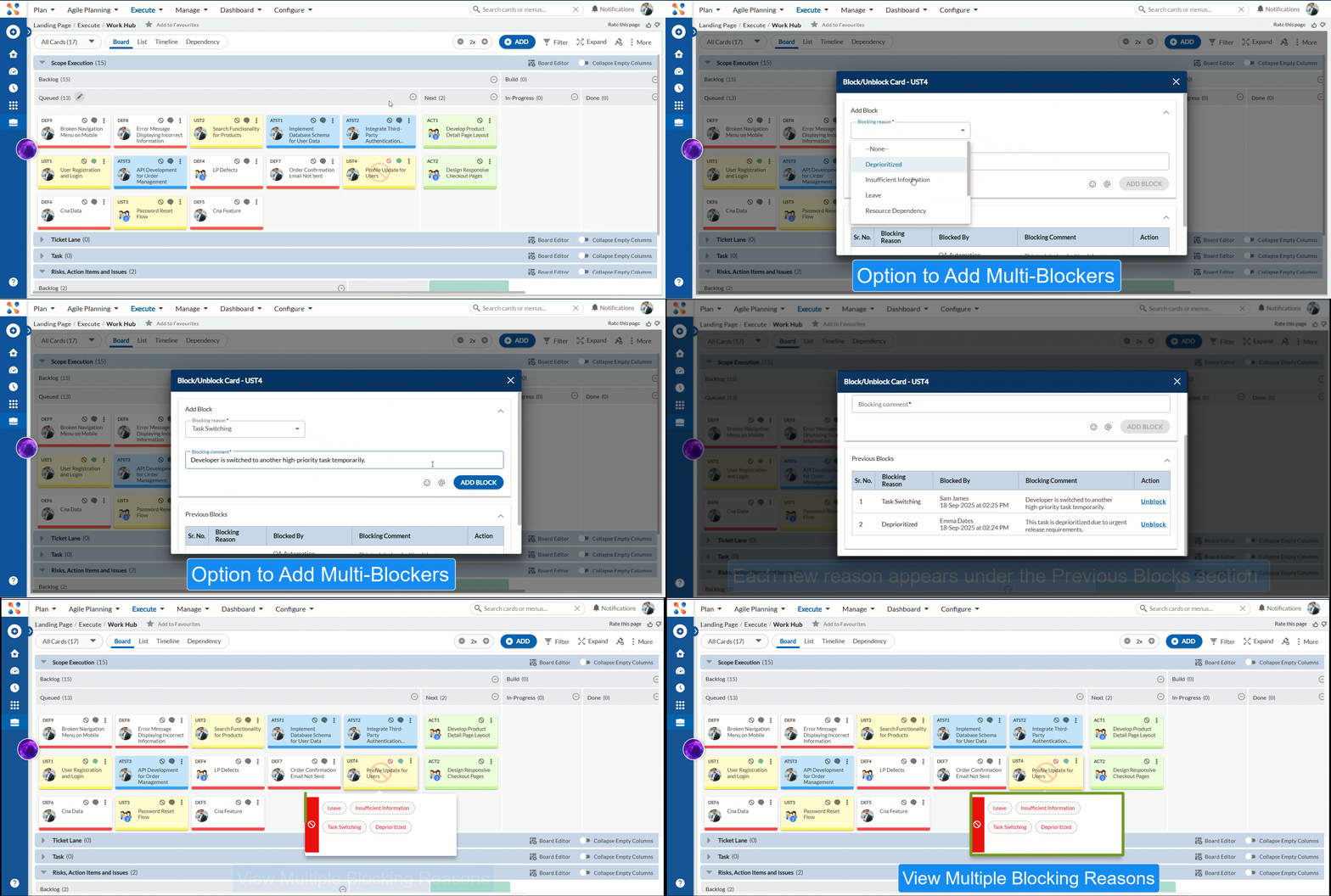
Nimble also addressed a common reality of modern work: blockers are rarely singular. With multi-block support for cards, teams could now capture multiple blocking reasons, each with its own context and commentary. This made dependencies more transparent and resolution more systematic, helping teams address constraints proactively instead of letting them stall progress.
Visibility controls played an equally important role. Enhanced configuration options allowed teams to decide whether certain cards appeared on both boards and lists or only in list views. This helped keep boards clean and execution-focused, especially in environments where not all work items need visual representation at all times.

Humanizing work: collaboration, recognition & culture
While productivity and efficiency are critical, sustainable delivery depends just as much on how people feel about their work. In 2025, Nimble made deliberate investments to ensure that increased automation strengthened human connection, not diluted it.
At the center of this effort was Nimble Café, which continued to evolve as a shared space for collaboration, communication, and recognition. Enhancements to the feed layout made conversations cleaner and easier to follow.
On the tool, you can thank your peers or anyone in the organization through ‘Kudos’ or celebrate and share your team’s wins. Also, instead of navigating projects one by one and updating the details of every workitem that is assigned to you, you can directly access workitems where you are the card owner or Todo owner from the Café.
Foundations for scale: Forms 2.0, Lists 2.0 & Templates
As Nimble’s capabilities expanded in 2025, so did the need to scale work without increasing complexity. Several foundational enhancements throughout the year focused on exactly that, making Nimble easier to configure, reuse, and roll out across teams and functions.
A major milestone was the continued rollout of Forms 2.0 across projects and templates. Forms 2.0 introduced a more modern, flexible, and intuitive way to capture information at the point of work creation. Instead of rigid configurations, teams gained dynamic forms that adapted to different use cases, whether they were managing IT projects, product development, content production, HR workflows, or sales processes.
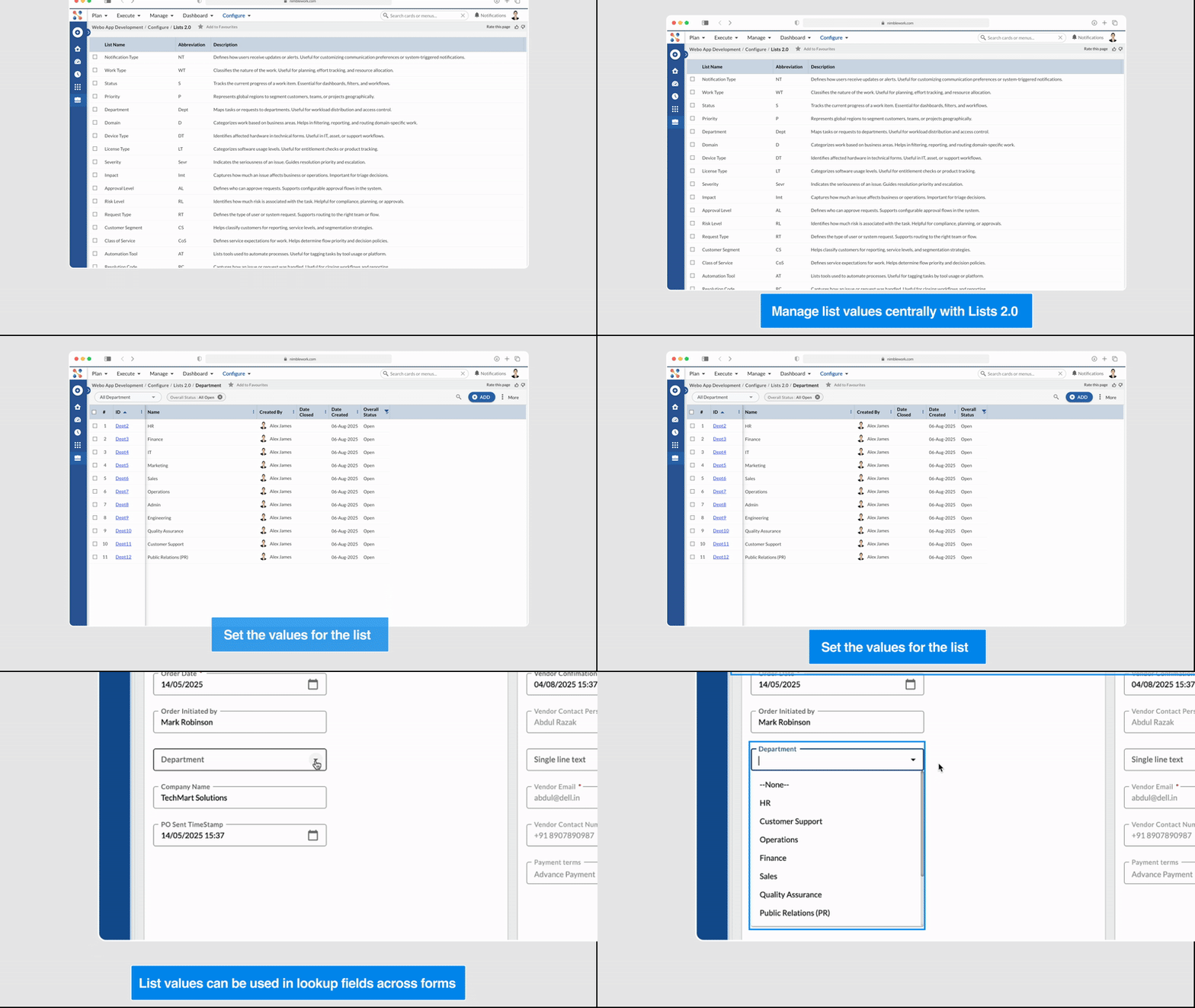
Complementing this was the introduction of Lists 2.0, which addressed a long-standing challenge in work management: maintaining consistency without duplication. With reusable dropdown values, unlimited attributes, and inheritance across the Nimble hierarchy, Lists 2.0 made it easier to manage shared data such as priorities, departments, locations, or categories centrally. This brought consistency across projects while still allowing flexibility at different levels of the organization.
Templates have also expanded beyond traditional project management scenarios. In addition to work management and digital transformation, Nimble introduced and enhanced templates across areas such as content planning, digital asset management, recruitment, sales handoffs, and team goals.
This reinforced Nimble’s position as an AI-powered work management platform that adapts to different kinds of work.

What 2025 has set up for 2026
Nimble is no longer just managing work; it’s thinking with the teams. It became the AI-powered work management tool that we were dreaming of.
As we shipped through the year, the goal wasn’t to add more features. It was to make work feel a little lighter each time you opened Nimble. Fewer blank pages. Fewer manual updates. Clearer signals. Better conversations. AI that helps when you need it, and stays out of the way when you don’t.
What I’m most excited about isn’t any single release; it’s the direction we’re on. A platform that keeps learning how teams work. That quietly removes friction. That gives you something new every time, not because it’s flashy, but because it’s useful.
2025 laid the foundation. 2026 is where this starts to feel truly different.
And if this year was about working smarter, the next one is about making that feel effortless.