


Most IT teams are drowning in data but starved for insight. AI doesn’t replace your team, it gives them the clarity to act before things go wrong.
Imagine this scenario:
2:47 AM — Tuesday
A global bank’s trading platform starts slowing down. Latency creeps up. Databases stall. Three critical servers quietly approach their limits.
3:14 AM — Platform down.
The post-mortem revealed the worst part: every warning sign had been sitting in the data for 72 hours. Unusual query patterns. A key API running 40% slower than normal. The data was there. The monitoring was running. No alert fired. No one connected the dots in time.
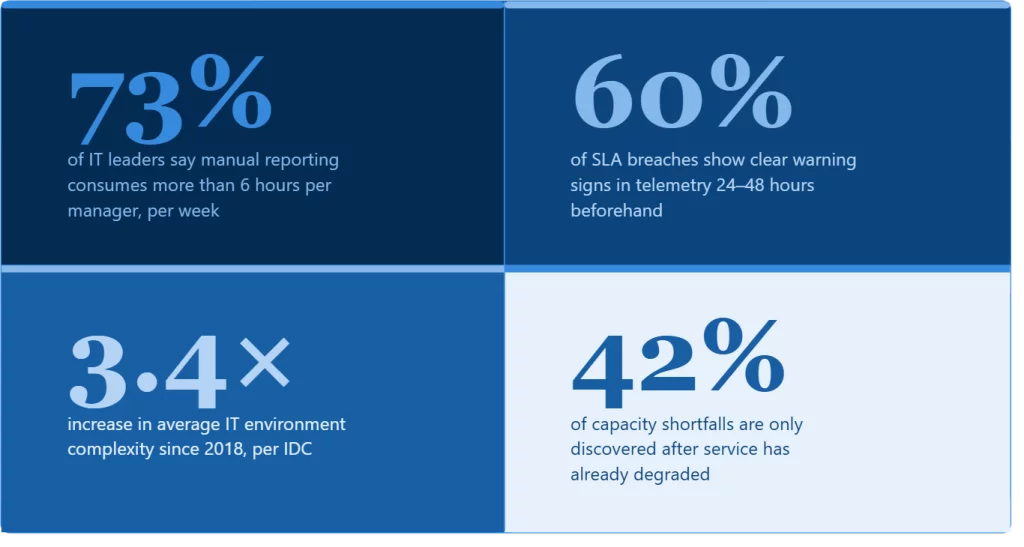
This isn’t a rare edge case. According to Gartner, 70% of IT outages are caused by changes that produce detectable signals well before failure. The problem isn’t a lack of data, it’s a lack of capacity to make sense of it, fast enough to matter.
At NimbleWork, we call this the intelligence gap: the growing distance between the signals your IT environment produces and your team’s ability to act on them in time. As cloud infrastructure, hybrid systems, and client SLAs grow more complex, that gap keeps widening and traditional tools and processes are not built to close it.

AI doesn’t solve this by replacing your engineers or service managers. It solves it by making sure the right information reaches the right people, fast enough to act on. Here are the four areas where AI makes the biggest practical difference in IT service delivery, and how NimbleWork puts them to work for some of the world’s most demanding organisations.
01. Smarter status reporting: always current, never late
Ask any service delivery manager how much time their team spends building status reports each week. The answer is always some variation of “too much.” Then ask how confident they are that those reports are accurate. The answer changes fast.
The core problem is structural. A weekly report is a photograph of a moving scene. By the time it’s pulled together, formatted, reviewed, and sent incidents have evolved, ticket queues have shifted, SLA positions have changed. The report tells stakeholders where things were, not where they are. And in IT service delivery, that lag is exactly where things go wrong.
AI fixes this at the root. Instead of waiting for a human to manually extract data from ServiceNow, Datadog, Jira, and three other tools every week, NimbleWork’s AI reporting layer keeps a continuously updated picture of your environment and surfaces the right version of that picture to each audience automatically.
Pull data from everywhere, automatically
Your ITSM, monitoring tools, cloud consoles, and project trackers feed into one unified view no manual copying, no lag, no reconciliation.
Turn numbers into plain-language narratives
AI doesn’t just aggregate — it interprets. It spots trends, flags anomalies, and produces summaries that read like a senior analyst wrote them.
Deliver the right version to the right audience
Your CTO gets a two-paragraph executive summary. Your network engineer gets a detailed breakdown. Your client gets a plain-English update. All from the same underlying data, generated simultaneously.
The biggest shift: reports stop being tied to a calendar. Instead of fixed Monday updates regardless of what’s happening, AI triggers reports when something meaningful changes, a service health bulletin goes out within minutes of a significant deviation being detected, not at the end of the week.
For Fortune 500 IT organisations managing dozens of vendor relationships and hundreds of SLAs simultaneously, this shift from scheduled to event-driven reporting is not a minor convenience and it’s the difference between catching a developing problem on Tuesday and discovering it in Friday’s report.
02. Proactive risk alerting: catch problems before they become incidents
Traditional monitoring is built on thresholds. When a metric crosses a line, an alert fires. This approach works for simple, obvious failures, a disk at 95%, a service returning errors. It breaks down completely for the far more common failure mode: slow, multi-system drift where no single number trips the alarm, but the combination is catastrophic.
AI adds a reasoning layer on top of your monitoring stack. Instead of watching individual numbers, it watches patterns learning what “normal” looks like for each component of your environment, at every time of day, across different business cycles. When things drift, even subtly, it surfaces the risk before any threshold is crossed.

Three specific signals AI watches that human teams managing complex environments simply cannot track manually:
Infrastructure health signals
AI learns that a server at 78% memory utilisation is perfectly normal at 2am on a Sunday and a serious risk signal at 9am on Monday during month-end processing. Context transforms the meaning of every data point.
SLA breach predictions
Rather than logging breaches after they happen, models project which tickets are likely to breach hours before the window closes based on current volume, team capacity, and historical resolution patterns. Your team gets a heads-up with time to act, not a post-mortem with blame to assign.

Third-party and dependency risks
When a cloud API you depend on starts responding 40% slower than its 90-day baseline, that’s a risk signal even if nothing has visibly broken yet. AI catches these drifts early. Human teams managing hundreds of dependencies cannot.
Even before AI entered the IT service delivery conversation, leading teams were already trying to solve the same problem: fragmented visibility. Nimble helped Teradata as the team used Kanban across consulting services, IT, and IT support-type projects to improve visualization, manage dependencies, and integrate client, vendor, and third-party services into delivery cycles. AI takes this same need one step further — from seeing work clearly to detecting risks, capacity issues, and SLA signals early enough to act.
💡 See how Nimble helps IT services teams move from strategy to production with AI.
Kick Off your AI journey today
03. Smarter capacity planning: stop guessing, start forecasting
Capacity planning has always been an uncomfortable exercise. Plan too conservatively and you pay for infrastructure you don’t use. Plan too aggressively and you scramble during peak demand, degrading service precisely when your clients are watching most closely.
The traditional approach, look at last year’s data, apply a growth assumption, and add a safety buffer was designed for stable, predictable environments. Modern enterprise IT environments are neither.
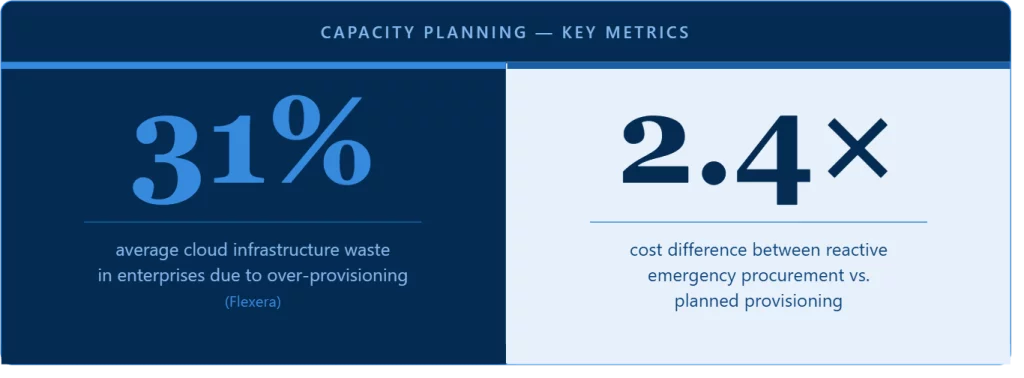

AI replaces the static annual forecast with a continuously updated demand model. It ingests business seasonality patterns, historical usage data, growth signals from sales pipelines, and real-time operational telemetry, simultaneously. The result isn’t just a more accurate forecast. It’s a forecast that updates as conditions change, rather than waiting for the next quarterly review cycle.
For NimbleWork customers, this means capacity conversations shift from reactive firefighting to informed planning with forecast confidence scores, scenario modeling, and clear visibility into where the next bottleneck is likely to appear, and when. Teams that previously discovered capacity shortfalls after service had already degraded now see them coming weeks in advance.
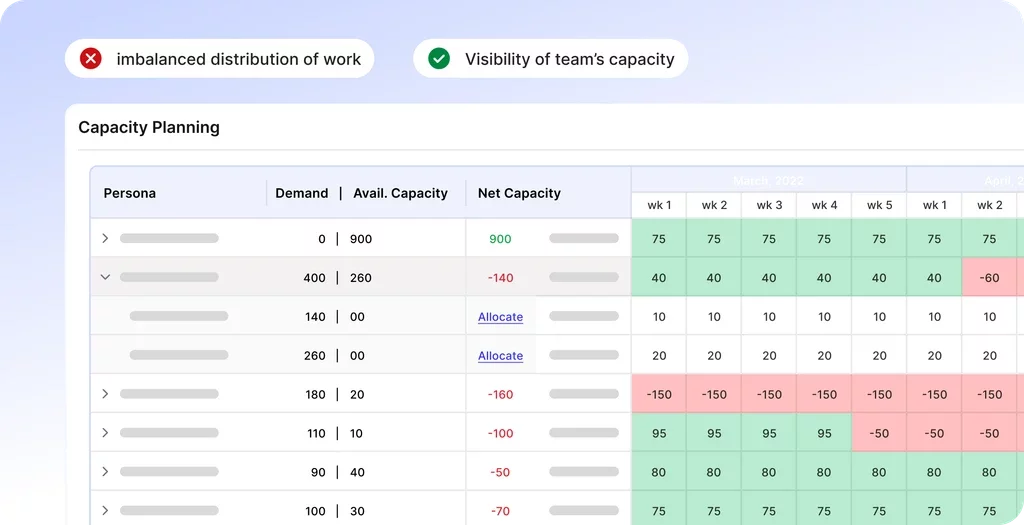

The honest caveat: AI capacity models are very good at predicting the future based on patterns they’ve seen before. Novel scenarios, a major client migration, an unexpected product launch — still require human judgment. Use AI to handle routine forecasting so your senior engineers can focus on the edge cases that actually need them.
04. Better client communications: consistent, timely, and never an afterthought
Client communications are among the most inconsistently executed parts of IT service delivery and one of the most consequential. Updates get written after an incident is resolved, by engineers who are tired and already moving on to the next problem. The result is communications that are technically accurate but often delayed, unclear, or pitched at the wrong level for the audience reading them.
AI addresses this by decoupling communication quality from the conditions under which it’s produced. The same incident data that powers your internal reporting can automatically generate a client-facing update, calibrated to the client’s technical level, clear about business impact, and ready for human review within minutes of resolution, not hours.
Beyond reactive updates, AI can detect early signs of client dissatisfaction before they surface as formal complaints. Sentiment analysis across email threads, ticket tone, and survey responses can flag accounts heading toward escalation weeks in advance. NimbleWork’s platform surfaces these signals so service delivery managers can address relationship issues before they become contract issues.
Non-Negotiable
AI-generated client communications always need a human review before they go out. Tone errors or factual gaps in external messaging carry reputational risk that internal reporting mistakes don’t. This step is fast, a two-minute review beats a two-hour rewrite after the fact and it is never optional.
05. What to measure: KPIs that show real impact
The most common mistake teams make when measuring AI in service delivery is tracking activity instead of outcomes: how many reports were generated, how many alerts fired. These numbers tell you nothing about whether anything actually improved. Here’s the outcome-focused measurement framework that matters:
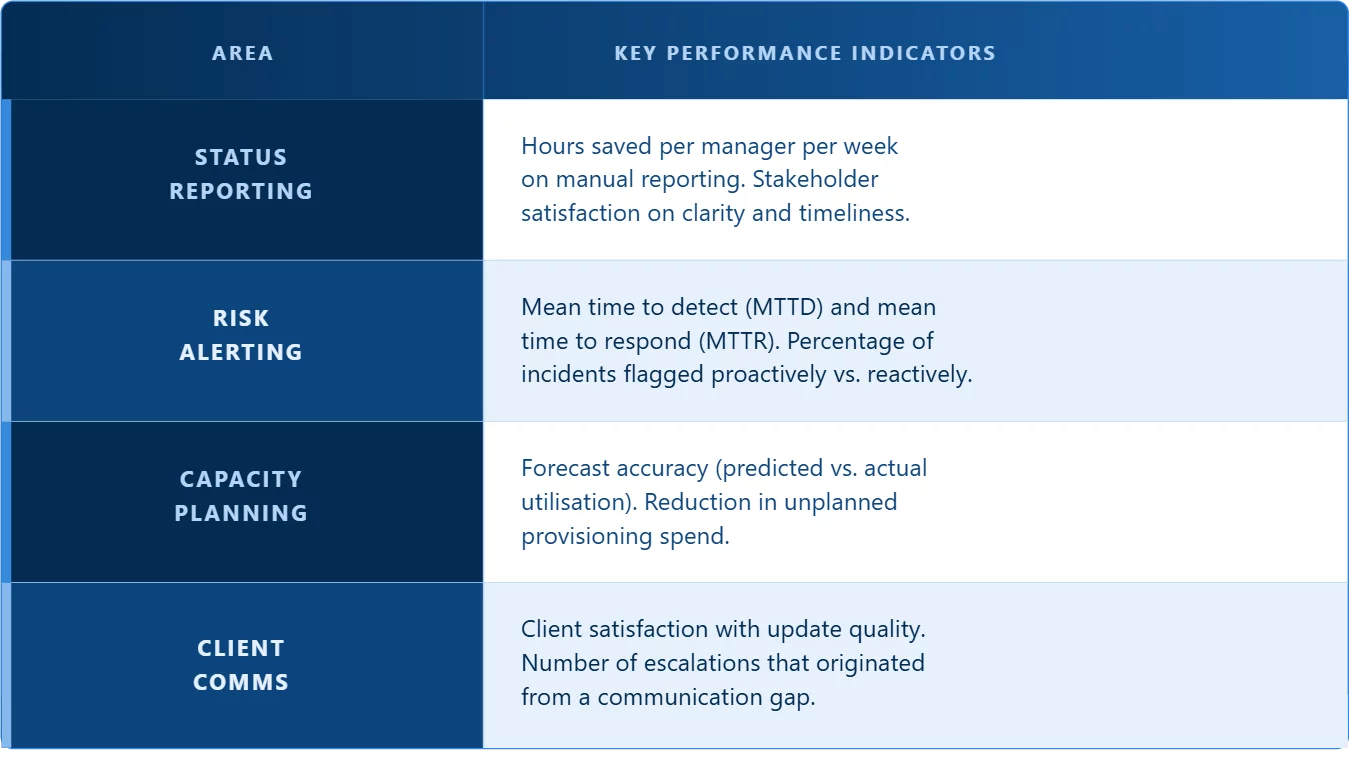

One KPI worth tracking across all four areas: the human intervention rate, how often AI outputs are corrected or overridden by your team. A high correction rate in a specific area isn’t a sign that AI is failing. It’s a signal that the model needs better training data or tighter guardrails there. Use it to improve, not to judge.
06. Governance: keeping humans in control
Most deployments of AI in IT service delivery don’t fail because the technology is wrong. They fail because governance is treated as something to figure out later — and “later” never comes. Workflows get automated without clear ownership. When the model makes a confident-sounding mistake, nobody knows whose job it is to catch it.
Effective governance for AI-assisted operations comes down to three principles:
Accountability stays with humans
AI can draft, flag, and forecast. Every client-facing output and every escalation decision needs a named human owner. No exceptions, regardless of how confident the model appears.
Auditability from day one
Log what the model recommended, what the human decided, and why they diverged. This isn’t just for compliance, it’s the primary mechanism for improving model performance over time.
Scheduled calibration
AI model performance drifts as your environment changes. Build a quarterly review cycle into your operations rhythm, not just your incident playbook. Reactive calibration is too slow.
Organisations that build these foundations don’t just get better metrics. They build the internal trust in AI tooling that allows them to responsibly expand its role over time moving from assisted reporting to autonomous triage, from predictive alerts to genuinely self-healing infrastructure. That progression doesn’t happen without governance. With it, it’s a matter of when, not if.
The intelligence gap is real, it’s growing, and it’s costing enterprises in downtime, wasted capacity, and client relationships they can’t afford to lose. The good news: it’s also solvable with the right tools, the right measurement framework, and the right governance in place from the start.
FAQs on AI in IT service delivery
How is AI different from the monitoring and alerting tools we already have in place, like Datadog or PagerDuty?
Traditional monitoring tools are threshold-based; they fire when a single metric crosses a line. AI sits on top of these tools and adds a reasoning layer. It watches patterns across multiple systems simultaneously, learns what “normal” looks like in context, and flags risk before any threshold is crossed. The difference is between a smoke alarm that triggers at 70°C and a system that notices the temperature has been rising steadily for six hours and warns you before it becomes a fire.
We’ve tried AI-powered tools before and the alert noise got worse, not better. How is this approach different?
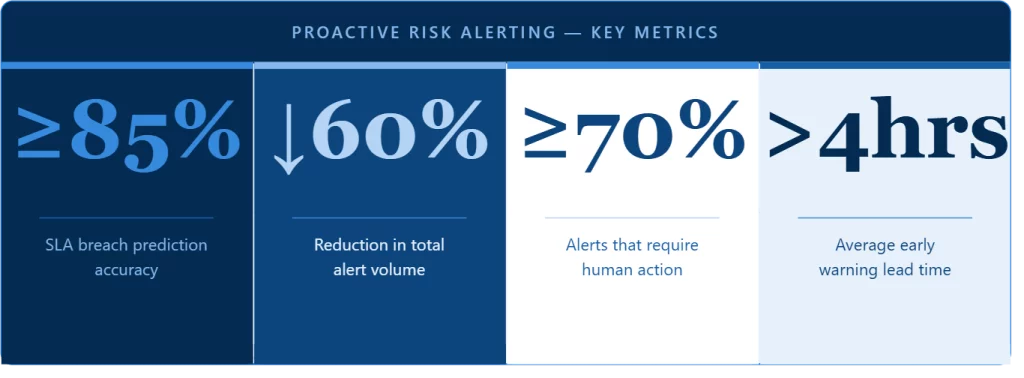
Alert fatigue usually happens when AI is layered on top of existing monitoring without proper tuning, amplifying noise instead of filtering it. The right approach inverts this: AI should reduce total alert volume by filtering false positives, self-resolving events, and duplicates before they reach your engineers. In mature deployments, teams typically see alert volume drop 60% while the proportion of alerts that actually require action stays above 70%. If your previous experience was the opposite, the model wasn’t configured correctly for your environment. Not a flaw in the approach itself.
Our team is already stretched thin. How much work does it actually take to implement and maintain this, and who owns it?
Initial setup takes a few weeks: integrating with your existing tool stack, establishing baselines, and setting governance rules. Ongoing maintenance is lighter but not zero. Model performance drifts as your environment changes, so a quarterly review cadence is essential. Ownership typically sits with a service delivery lead, not a data science team. Most organisations see a net reduction in team workload within the first quarter, once implementation effort is accounted for. But only if the setup is done properly.
How do I make the business case for AI in IT service delivery to leadership that’s skeptical of AI hype?
Skip the hype and lead with costs leadership already knows. What did your last major unplanned outage cost in engineering hours, client credits, and reputational damage? Then point out that 70% of outages produce detectable signals well before failure. Add the operational numbers: 31% average cloud infrastructure waste from over-provisioning, 2.4× cost premium on emergency capacity procurement, 6+ hours per manager per week on manual reporting. Build the case around what you’re currently spending on preventable failures. Not around what AI promises to deliver.
How do you manage AI making a false prediction or missing an incident?
This will happen, and good governance exists precisely for this reason. Nothing client-facing goes out without human review. No exceptions. For internal predictions and alerts, the human intervention rate (how often AI outputs are corrected) is tracked as a core metric and used to improve the model over time. Every divergence between what the model recommended and what the human decided is logged. Think of AI like a capable junior analyst: useful, often right, but always supervised.
How do we make sure AI-generated client communications don’t damage relationships?
Human review before anything goes out externally is non-negotiable. A two-minute check by a service delivery manager costs nothing compared to the fallout from a tone-deaf communication after a major incident. Beyond that, the model should be trained on examples from your best service delivery managers, not generic templates, and calibrated to each client’s technical level and communication preferences. Sentiment analysis on ongoing email and ticket threads can also flag deteriorating relationships weeks before a formal complaint lands.
How does AI capacity planning handle situations it has never seen before: a sudden large client migration, an unexpected product launch?
It doesn’t, and any honest answer has to acknowledge this. AI capacity models are pattern-based; they forecast by extrapolating from historical data. Novel scenarios require human judgment no model can replicate. The right approach is to use AI for the 80% of capacity planning that’s predictable and routine, freeing your senior engineers to focus on the edge cases that actually need their expertise. Human review of capacity forecasts ahead of major business events should always be part of the process.
We operate across multiple cloud providers and on-premise infrastructure. Does AI work in that kind of complex environment?
Hybrid and multi-cloud environments are where AI adds the most value, because the complexity far exceeds what human teams can monitor manually at the required granularity. The key requirement is data integration: the AI layer needs to ingest telemetry from all your environments, not just a single platform. NimbleWork is built to integrate across AWS, Azure, GCP, and on-premise systems simultaneously. The more heterogeneous your environment, the larger the intelligence gap and the larger the potential impact of closing it.
How long does it realistically take to see measurable results?
The first 30 days are setup and baseline establishment; the model needs time to learn your environment before it can distinguish signal from noise. Days 30 to 60 is where early wins appear: fewer manual reporting hours, first proactive alerts, initial capacity forecasts. By day 90, teams with proper setup typically see measurable reductions in MTTD and MTTR and clear reporting time savings. The organisations that see results fastest treat the first 90 days as an active implementation, with clear ownership, a defined review cadence, and a willingness to correct the model when it’s wrong.
How do we prevent our team from becoming over-reliant on AI and losing the institutional knowledge that makes our service delivery effective?
This is the most important long-term governance question. Make AI outputs transparent; engineers should understand why a flag was raised, not just that it was raised, so they build pattern recognition alongside the model. Keep the human correction process active, not passive. And watch the human intervention rate over time: if it drops to near zero, that’s not a sign of success. It means people have stopped engaging critically with AI outputs, which is exactly when model drift becomes dangerous. AI should augment institutional knowledge, not quietly replace it.